Search

umbertosite

World news daily blog

EUROPE: A GREATER SWITZERLAND?

download-1Short of debating a “manifest destiny” for Europe, a swiss referendum on immigration  introduced what could be called – probably against the will of a majority of Swiss citizens – a “manifest destiny for Switzerland in Europe”. That wouldn’t be so surprising after all. During half of the past millennium, Switzerland made important decisions about its future based on European events. Primo: after the battle of Marignano (“Battle of the Giants”) in 1515 when the Swiss decided to give up their policy of influence in Southern Europe and to cut the losses after the 10,000 casualties in that battle;  Secundo, after the Treaty of Utrecht of 1713 that upgraded the peace of Westphalia of 1648 making room for a Swiss Entity in its middle; Tertio, with the Congress of Vienna and the international guarantee of Swiss neutrality in 1815. One could also add the events before and after the basically religious Sonderbund war of 1848, when Switzerland acquired its present constitution.


But now, in the XXI century, Switzerland is entirely surrounded by the European Union, i.e. by European states that are unlikely to go to war against each other, thus putting Bern in the uncomfortable position of having to deal with just one political and economic bloc: the EU.

This situation is the object of frequent debates in Switzerland, but a referendum took place a few days ago in the Italian-speaking part of the Confederation, where seldom the important decisions are taken and where the people have shown through direct democracy to have a contrarian attitude as compared with the rest of the Swiss States – or Cantons. This time the people of Canton Ticino voted to give precedence for jobs to local workers rather than to workers coming from Northern Italy. The issue was raised at a moment of intense discussion in Europe on immigration, so it was picked up by many european media. But it really has nothing to do with immigraztion, as the over 65,000 Italians involved are not immigrants but daily workers from areas close to Switzerland who go back home to their italian communities every evening. Everybody knows that without those italian workers the economy of the Cantone would grind to a halt. So what is all the fuss about?


Basically, the local right-wing majority party, Lega dei Ticinesi, wanted to “send a message” to the other Swiss “confederates” on immigration at large, based on another referendum, two years ago that restricted the freedom of circulation in the Confederation, and whose outcome has still to be negotiated with Brussels. So Switzerland, not a member of the European Union, could set the pace of the general debate on immigration in Europe that first involved Hungarian voters on 2nd October.


A year ago a group of Swiss personalities published a manifesto (“Switzerland in Europe”) against the spread of anti.european populism in the Confederation, but during the past months the populist sentiment in Europe itself grew, not just in Hungary.

Some media these days remembered that it was in Zurich, Switzerland’s largest city, that Winston Churchill gave a celebrated speech in favour of the union of Europe, seventy years ago..


Switzerland is multilingual and the Confederation as it is now was born at the peak of the XIX century, the century of nationalisms. “An Europa Kammer for European heads of state in Strasbourg, for a strong and more democratic Europe” is former German foreign minister Joschka Fischer’s vision to prevent populism from spreading all over the continent, destroying the EU..


Featured post

Piracy and the Modern ‘Flying Dutchman’

Modern piracy is not about legendary ships like the Flying Dutchman but they have something in common with ‘Het Vliegend Ship’: the Dutch crown. then like today the main beneficiary of Dutch piracy. Today’s Dutch piracy is less adventurous but no less profitable. It is based on fiscal evasion and on offshore ‘fiscal paradises’ whereby the Dutch steal from other states against all EU rules. Thus thy keep Holland monarchy, the word wealthiest, happy.

What is strange is that with so much to hide Holland still dares playing the ‘ftugal’ cousin in the EU family when it comes to helping countries like Iike Italy, heavily affected by the present pandemic

No doubt,while it is true that Italy must introduce important reforms in its system, Holland needs to entirely reform its ‘Flying Dutchman attitude’.

UP YOURS* MR RUTTE…

The  Dutch prime minister Mark Rutte, speaking to Dutch workers AT a garbage disposal plant  said he would never let Italy or Spain to obtain money from the European Union. Rutte’s thumbs-up gesture when he said so went viral on social media. Apparently, the Dutch are convinced that the Italians do not deserve European money and that they would squander it anyhow. They are damn wrong: in the EU it is precisely the Dutch who take advantage of communal money. They, not the Italians or the Spaniards. are the culprits, the profiteers.

Says who? The Tax Justice Network, a British – not Italian or Spanish -authoritative pressure group that identified four rogue states (‘stati canaglia’) when it comes to stealing  systematically money from others: Holland, Luxembourg. Switzerland, the U.K. Thank to the  lax rules of the EC, The two that belong to the EU  can get away with it, same as Switzerland that doesn’t belong – I will talk about the Swiss later on -and the U.K that got out thanks to Brexit and will sure miss not having the Europeans to kick in the ass any longer..

The Brits took to state-sponsored piracy early on.i.e.half a millennium ago.The Queen ‘s namesake and predecessor Elizabeth I solved all her budget problems thanks to her pirate ships that systematically raided Spanish galleons. But the Dutch? Do they think we are still in the era of the mythical  Flying Dutchman?

Still, thanks to ‘ fiscal dumping’ the EU rogue states lift huge amounts of cash from Italian (and Spanish ) pockets thanks to intraeuropean profit shifting. according to TJN.it will take me another post to detail the mechanism whereby Dutch modern day piracy is organised in Holland. There I will also write about Switzerland.

For the time being let me tell Mr Rutte that Italy never defaulted unlike Holland (remember the famous ‘tulip crisis’-

For the time being up yours Mr Rutte…

*Admittedly, it is a tricky title which can be only translated by the italo-american “fungool”.

Queen Letizia of Spain, King Felipe VI of Spain, Dutch Prime ...

CHILDREN OF CORONAVIRUS


Time to think of what the ‘generation of  Coronavirus’ will look like because we now know that the pandemic will affect the next generation same as postwar events affected mine, There are similarities indeed.

In the forties European children were given around games made in the US branded ‘ERP’ European recovery program a.k.a. Marshal Plan’.

In case something like that will go on now. European authorities will better start from children to win widespread approval because it looks like with adult Europeans they are famously failing.

But I doubt the Europeans will do as good a job as the Americans did after WWII.

Also, because they are going to grow up under a certain amount of duress, these youngsters are likely to be a no-nonsense lot, rather than the easy going generation that we know. Whether they’ll be better or worse than their seniors, they sure won’t be the same. So let’s stop pretending like we know them. We don’t.

And in the unlikely case that I succeed in having under my roof all my three grandchildren together it will be fun to observe the differences between Luca, the American-Italian from California, Piet Ilja,  German-Russian from Berlin, and a Leonardo who is growing up between Italy and Texas…

All they will have in common is that they all belong to the ‘Coronavirus generation’


a


Italy’s resilience and good practices seem to be winning the challenge with Coronavirus

L'Imperatore Costantino I raccontato da Alessandro Barbero

So far we perceive no improvement in the pitiless daily count of the dead  but it is still time to observe that Italy’s approach to the COVID-19 was the right one both in terms of timing and of good practices. And all this before the epidemic reaches Milan, Italy’s continental heart (Rome, the  capital is its peninsular hub) Knowing Milan well, I have no doubt that this city with its hinterland and with the resilience of its population  will become a rampart against the spread of COVID-19 at world level. Milan means three millions inhabitants, part of a Region, Lombardy, 10,000,000 strong, Europe most important urban hub south of Paris, Berlin, London.After the fall of Madrid. overpowered by the dead, if the Milan rampart falls there will be no way to tell what will happen to Europe as a whole especially after the EU appears unable to find an agreement on what to do now.

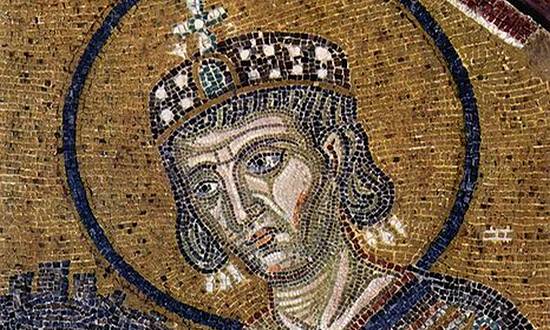
After all, Milan was the city that emperor Constantine chose as the capital of the Roman empire while he was building Constantinople in the East…A city unlike the others.

L'Imperatore Costantino I raccontato da Alessandro Barbero

Bergamo’s sad processions.

Risultato immagini per furgoni militari processione bergamo coronavirus

In what quickly became Coronavirus iconic symbol, all tv networks broadcasted last wednesday night a procession of military personnel carriers full of corpses of victims of the epidemic. Sixty of those caskets  had to be moved in search of a burial all the way to Ferrara, on the Adriatic sea a few hundreds miles away!

At 8 a-m on the first day of spring, Bergamo had 8000 people  with Coronavirus.

Italy overcame China in this epidemic and China is actually helping Italy with equipment and advice.

Bergamo is very close to Milan, Lombardy’s capital. ‘If Milan were to collapse ,said Milan‘s mayor Giuseppe Sala, it would be a real disaster”

So far this didn’t happen, but for how long?


600 years of Florence’s orphans’ hospital

This is the 222nd  post published in this site since its inception

It was June 1410 when Francesco Datini, a well-known banker from Prato. the inventor of the check and of  the IOU, felt that the end was approaching and decided to write a will  that devoted part of his considerable wealth to the building of a hospital for Florence’s derelict boys and girls, something that  was unknown in Europe at the time. A new place where children would be brought up and cared for while they learned a trade and prayed for their sponsors and benefactors, the City of Florence and the Grand Duchy of Tuscany, the most civilized and advanced of Europe’s states.

Therefore in the southern corner of Florence’s third ring of walls an important piece of real estate was bought in view of building a huge and state-of the art hospice  to be named Spedale degli Innocenti and to be equipped with all the most modern services for the welfare of all the children, of their monitors and of of the personnel that such an institution would require., included works of art and archives,

Arte della Seta, the Guild of the silk workers a.k.a. ‘Por Santa Maria’, were in charge of the huge building site, and a member of the Arte was also the designated architect, ‘ser’ Filippo Brunelleschi who was also to build, starting in 1427, the Cupola of Santa Maria del Fiore, Florence’s cathedral, one of the modern world’s marvels.

It is not by chance that the show in honor of the sixth centennial of this institution was called ‘Il rinascimento dei bambini’, the children’s renaissance. Tuscany best known grand duke Lorenzo il Magnifico was the princely model of ‘buongoverno’, good governance, and of love of the arts.

A beautiful portico  runs on the western side of the piazza (see pictures) and high between every other arch there is a round stone work with a newborn infant inscribed in it by  Andrea della Robbia, each of them pictured in ‘terracotta invetriata’ with their arms stretched in a tentative embrace. Andrea Della Robbia was the master of ceramica and terracotta and his signature children.  quickly became the symbols of the ‘Spedale’.

‘Every time I walk by that portico and I see those children with their outstretched little arms it is as if they appealed to me: Antonietta. stay with us, you know that this will always be your home…

But my mother was not an  orphan so I wondered early on what was her secret connection to the Spedale degli Innocenti. I understood when I was still a boy that it had something to do with her father whom she adored to the point that any further inquiry would be out of the question

I understood there was a mystery behind my mother’s reticence. I detected a family secret that  I would have sooner or later to discover, since after my mother’s death nobody was left to deal with that century-old story.

But my mother died without coming clean and in the end I was left with a bunch of papers, old documents, letters and agendas that I inherited and that were stored in a huge dark brown secretaire dating back to 1776,  the year of the U.S’ independence.

It took me years, on and off my other assignments when I lived in Switzerland, but I managed to put together the whole story, a story that encompasses three centuries without counting another three centuries during which the Giovannonis – this was the name of my mother’s family – went on to become one of Chianti’s most affluent families,

The Giovannonis had gone from farming – the source of their wealth, to weaving . -they owned several factories – and on to liberal arts, and that was the beginning of a slow end for them. Or maybe it was because  one ‘pater familias’ decided to divide his fortune among all his ten children, male and female, contrary to tradition and to common sense..

My grandfather Umberto was a judge, a ‘procuratore del re’ , meaning he represented the Crown in trials taking place in Tuscany. At the time, unlike now, the office of the public prosecutor depended  on the Interior ministry so it was highly political and it was of the essence that a public prosecutor should understand the prevailing mood in politics. This was totally alien to judge Umberto’ principles and it was this that ruined his career…

Judge Giovannoni was known for being strict and politically reactionary. His private life was to mirror his very conservative political views. A widower at the beginning of his career, he lived with his young governess Marina, a tight-lipped no-nonsense energetic woman who took in her capable hands the reins of judge Umberto’s house.

I read copybook after copybook with the judge’s accounts, written in Umberto’s neat calligraphy, fastidious to the point of writing down the price of an ice ream, and absurd to the point of reporting major political events in margin of minor expenses, ——-like in 1936, under an anonymous train ticket: ‘Italian troops occupy Addis Ababa’ or, in 1938, under a line on the price of a ‘trattoria’, ‘Hitler visits Florence together with Mussolini’…

As a magistrate he kept clear of politics, to his disadvantage as I realized at length, but he joined fascism late in life and, surprisingly, at the same time he quit freemasonry and went back to the catholic church, as he explains in one of his black notebooks that were also stored in the XVIII century secretaire.

I know nothing about the judge and his governess,  whom in the end he decided to marry, when they lived ‘more uxorio’ in the dark apartment of via faentina by the Mugnone stream. Antonietta, my mother, referred to those years when in her will she wrote  about her ‘unhappy youth and very unhappy childhood’

In her last years my mother told my sister, who in turn told me, that the couple had three children and all three were delivered to the Spedale degli Innocenti under false names. Reading my grandfather’s black copybooks I discovered another girl, a fourth daughter, Miranda like the character of a Fogazzaro novel. In one page I read ‘at 6h 30 h in the morning Miranda was born’ Then, a couple of pages later: ‘My little Miranda is dead’, and I detected in this possessive ‘my’, never used before, all the desperation of a father who had disposed of his children apparently without a second thought for the sake of respectability. All but Antonietta whom he later looked for at great pains and managed to find .against the Spedale’s strictest rules of privacy, probably  due to his authority as a judge, and to take home to live with himself and Marina, whose feelings I have no way of knowing except that between her and Antonietta there was no love spared, this I know for sure. Umberto’s wife Marina was my grandmother: When I was a child during the war she would take me me to the public gardens. Once a german sodier approached us in the street: one of those boys  Hitler and Mussolini sent to the front jn the last months of the war. Looking at my grandma he muttered ‘Mutti..’ (mom)

‘He had tears in his eyes’ she had told me sadly’

Since they were now a married couple, the constant pressure Umberto had been  under for years surely eased, but his career was compromised. He was not to reach the highest degrees in spite of the numerous letters of recommendation by upper judges that I read

Judge Giovannoni was never to recover from the ruin of his career due to  secret reports on his family life prior to marriage, surely the work of dedicated spies,

He also showed not to have realized, not even at the end of his life what had really gone wrong, aside from his secret family life that is.

It all dated back to his most important trial, the Volterra trial. I will tell about it in a book I am writing about my namesake and grandfather, the strict, unhappy magistrate Umberto.


1572222831 (1)innocents-hospital-florence1.jpgUmberto 123

Lorenzo_de_Medicihqdefault


BITCOIN’S BREAKTHROUGH IN SWITZERLAND 2. ANGELS & DEMONS

Image result for marco pizzuti criptocrazia non autorizzata

In our first post we warned about the dangers of Bitcoin , such as illegal clients, trafficking et alia.

But of course there is also a silver lining around the dark cloud of mafias and criminals : Bitcoins can also be used for good purposes after all. Trouble is that once you put a blockchain in motion there is no way – human nature being what it is – you can make it work only for a good cause.

First of all, what is blockchain ?

We get the following information from an excellent little book : ‘Criptocrazia non autorizzata’ by Marco Pizzuti (Edizioni “Il punto d’incontro”)

« Blockchain is the name of the game : it is the mechanism upon which all cryptocurrencies are built – based on ‘consensus’, which in turn is based on the guarantee provided by at least 50 % of users.

‘Every new block carries with it a marker that registers the hour/date of emission while a ‘hash’ prevents the retroactive modification of data, thus preventing the manipulation of files, each of them chained in turn to the hash code of the previous bloc. This is how it works :

‘The economic value of a bitcoin is the result of the meeting of supply and demand with no intermediary involved, It is not a State that can guarantee the new currency, while the ‘proof of work’ (POW) is contained in each and every transaction, which is in turn based on trust rather than a State’s guarantee’.

Zug, one of the two sites singled out by FINMA, has been recently become famous for being the head quarter of many start-ups working developing the bitcoin technology.  To the point that it has been named the “Crypto-Valley”.

Some observed ironically that POW also means ‘prisoner of war’- and speculated on who are the losers and the winners at this game ? Are bitcoins – as their promoters claim – a win-win solution to currency shortage ? Or are they just a technological upgrade of a ‘Ponzi scheme ?

Bitcoins and similar currencies haven’t been in use long enough – they were first implemented in 2009, right after the world crisis, – to give us a clear answer to this question.

No doubt, the number of financial entities that are interested in the bitcoin’s success is growing, and the Swiss FINMA’s direct involvement that was described in our previous blogpost is a proof of how much a regulator’s endorsement may count.

The very name of bitcoin initiator (‘Nakamoto’) is but a ‘mot de passe’ for who knows what entities.

What we know for sure instead, based on experience in other fields, is that secret services worldwide are quick to grab any initiative that looks lucrative, however risky it may turn out to be, in order to finance terrorist groups or buy weapons or speculate on foreign currencies so as to destabilize other countries’ economic systems.

After WWII, The U.S’ CIA and the USSR’s KGB fought each other with opposing visions of political events, each accusing their opposite numbers of spreading disinformation and of offering to public opinion ‘conspiracy theories’. In the U.S. ‘conspiracy theories’ were first used when a conflicting view in the aftermath of president Kennedy’s assassination first appeared, i.e. when the Warren Committee published conclusions that were clearly at odds with the first official version of the president’s assassination.

A parallel story, also about a president’s death, was fed to the Italian public concerning Aldo Moro’s death in Italy in 1978. In that case too the painstaking research made by independent whistleblowers was discredited by the mainstream media in favor of an ‘official truth’ that was supported by the ‘political compact’ that was in power in Rome.

As you can see,here are enough reasons to keep an eye on the evolution of the bitcoin and of other similar currencies with our website.

BITCOIN’S BREAKTHROUGH IN SWITZERLAND 1. THE DARK SIDE

Image result for paradeplatz zürichImage result for bitcoin

WHETHER YOU LIKE BITCOINS OR NOT, THIS IS THE NEWS : LAST WEEK  FINMA, THE SWISS FEDERAL AUTHORITY FOR FINANCIAL MARKETS, DELIVERED A BANKING AUTHORIZATION TO TWO FINANCIAL SERVICES BASED ON ‘BLOCKCHAIN’ (see 2.) TECHNOLOGY. THIS IS A FIRST FOR SWITZERLAND.

The beneficiaries of Finma’s authorizations are SebaCrypto, based in Zug and Sygnum, based in Zurich.

We can now say that ‘blockchain’ made it to Bahnhofstrasse, Zurich century-old banking Mecca.

To be sure, these were not the first companies trading as ‘cryptobanks’ in Switzerland (or Germany) but they are the first to receive a full authorization by an important federal authority of a European country, surely quite a step forward for this controversial trade and an encouragement for those who have been counting on cryptobanks to create new financial instruments based on ‘blockchain’ technology’. Seba Crypto for instance had set aside CHF 100mos in expectation of FINMA’s go-ahead.

A full Swiss financial licence is no kids’ stuff as it will put skeptics to rest for some time.

Does this mean that adventurous operators like arms merchants or even drug dealers will have a free ride  ? Not quite, because FINMA is supposed to make sure precisely that the kind of clients those two companies deal with will operate within the law. Which law though ?

Swiss law which traditionally protects financial dealers is not quite as efficient when it comes to ‘mafiosi’ such as ‘ndranghetisti’, i.e. members of the calabrese ‘ndrangheta’ the world’s most powerful and probably richest mafia of all, specially active in drug trafficking.

‘Ndrangheta’, which is based on local chapters called ‘ndrine’ is now very active in Switzerland and in Germany and thrives thanks to the relatively mild Swiss anti-mafia legislation. Indeed, so far Switzerland has been rather lenient on mafias, in spite of evident episodes that surfaced on the European media. (This site, among others was sensitive to such coverage since the beginning ).

‘Ndranghetisti’s whereabouts are mostly monitored by Milan’s ‘Procura ‘ whose chief Francesco Greco is one of Italy’s top experts on mafias.

In spite of their traditional Calabrese roots – often just little mountain towns like San Luca. The ‘ndrine’ employ first class experts coming from the best universities, hired by local chapters in Milan or in Switzerland proper where only Milan judges can spot them thanks to their powerful databases.

This may cost double-breasted ‘ndranghetisti harsh convictions, when they must deal with Italian magistrates who are able to throw them in the slammer with a ‘41bis’ conviction, This article of Italy’s criminal law is the mafias’ bogeyman in Italy that was introduced thanks to judges like Giovannii Falcone, who was killed by a 1992 car bomb near Palermo and who first encouraged Italian judges to ‘follow the money trail’ when dealing with the mafias.

The two licences approved by last week by FINMA are geared to ‘professional and institutional clients’, two categories that encompass a wide slate of operators, one way or another. The critical part of these kind of deals is indeed the ‘bridge’ they create between traditional assets and digital assets. Therefore, the focus is precisely on the (formerly missing) link between traditional and digital assets. A link that is in now in existence thanks to these last developments.

Indeed, last february Julius Baer and SebaCrypto have announced that they would merge in view of FINMA’s authorization. Indeed, barely a month from now, in October. On the other hand, Zurich’s asset management has a 17.5 % share in Seba. Next : 2. What is ‘blockchain’ and why it counts

This blog will deal with it in a further blogbost.

“RUSSIA IS BACK” – PUTIN’S MESSAGE

Russia-_Naval_drills_in_Mediterranean_SeaOn Navy Day,  28 July, President Putin participated in the Main Naval Parade that took place on the Neva River in St. Petersburg, Russia.  It was a great display of Russia’s determination to play again a decisive role  on the oceans, three centuries after first appearing on the Baltic sea where the czar’s new capital town was built.

Putin reviewed the ships and the Navy personnel from the Baltic, Black Sea, Northern and Pacific fleets and the Caspian Flotilla, as well as various ships and cutters along with a Navy aviation group, all taking part in the parade.

putin-marina-2-640x267

“We will not simply preserve our present status; we will move beyond it. We will build a fleet with unique capabilities, focused on a long-term historical perspective – the fleet of a strong and sovereign nation” said Vladimir Vladimirovic’ who sailed on board the cutter Raptor around combat ships gathered in parade formation in the inner harbor of Kronstad.

Displaying over forty combat ships, out of a total of over two hundred, in a geopolitical area heavily dominated by two NATO fleets, Russia’s president showed the leverage he has conquered over the past years in this part of the world between the Middle East and the Arctic region, where Russia  has always been present.

Moscow’s intervention in the Syrian crisis was of the essence. Thanks to the survival of the Assad regime and to the consequences of the war in the near East Putin could consolidate his opening to Cairo in spite of the ongoing alliance between Egypt and Washington. Apparently Putin who famously considered the fall of the Soviet Union the XX century’s worst geopolitical disaster, when it comes to geopolitics goes by the book, but it is a yellowed soviet book, pursuing the USSR’s maximum extension and trying to adapt it to present times and to Russia’s present dimensions, still not accepting the U:S.’s definition of Russia as a ‘regional power’.

China’s emergence as a world power, though. has forced Moscow to take note of Russia’s subordinate role as compared to Beijing. Whence a reappraisal of the Russian-Chinese alliance. Flexing its muscles with the traditional enemies in Washington is one thing, doing the same with the traditional ally China is another.

Therefore, Putin’s display of naval power ends up being more effective with the Chinese and with the Europeans, as compared with the Americans, who have – and will maintain for the time being – a comfortable advantage in the control of sea routes and in the total strategic weight of their respective fleets.

Russia-con-Aquila-Stemma-Bandiera-Russa-URSS-Bandiera-vendita-calda-di-buona-3X5FT-150X90-CM-Banner


Create a free website or blog at WordPress.com.

Up ↑

Create your own website, free on WordPress.com.Create your own website.
Start free